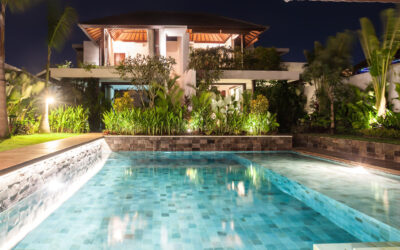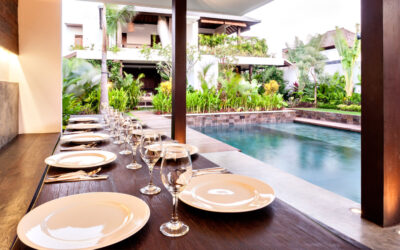
Building a villa is one of the most rewarding ways to own a home in Amed, and one of the most demanding. The coast here is quiet, the land is steep and the rules are specific.
This guide explains how to build a villa in Bali’s east, step by step: choosing land, understanding titles and zoning, getting permits, and planning a realistic budget.
Building a villa in Amed
Before you look at a single plot, decide what the villa is for.
A home you live in, a holiday home you rent out, and a small development you plan to sell are treated differently under Indonesian law.
The purpose shapes the land title you need, the permits you apply for, and the way you own the property. Getting it right at the start saves time and cost later.
If you are still deciding whether to buy a villa or build your own, start with our guides to buying a property in Amed and the Amed rental market.
Land titles and foreign ownership
Indonesian land law recognises several titles. The main ones you will meet are:
- Hak Milik (SHM, freehold). The strongest title, but it can only be held by Indonesian citizens. Foreigners cannot own freehold land, directly or through a nominee arrangement. Nominee structures are not recognised by Indonesian law and leave the foreign party without protection.
- Hak Pakai (right to use). Available to foreigners who hold a valid residence permit, for a residential house. On state land it runs for up to 30 years, can be extended for 20 and then renewed for 30. On freehold land it is granted for up to 30 years and can be renewed by a new deed. Minimum price and other limits set by the land ministry apply.
- Hak Guna Bangunan (HGB, right to build). Held by Indonesian companies, including a foreign-owned company (PT PMA). It follows a similar structure of up to 30 years, a 20-year extension and a 30-year renewal.
- Leasehold (hak sewa). A private lease from an Indonesian owner for an agreed term. It is common in Bali, but your protection depends entirely on the lease agreement, so it needs careful drafting.
Extensions and renewals are not automatic. Each requires an application, and the land must still conform to the spatial plan at the time.
What will the villa be used for?
If you plan to rent the villa out commercially or build to sell, you will generally need a PT PMA with the right business licences. For a private home, Hak Pakai or a well-drafted lease may be enough. Which route suits you is a question for your notary or lawyer.
Zoning: can you build here?
Not every plot can be built on, whatever the seller says. Land use in Bali is governed by spatial plans at the provincial and regency levels (RTRW) and, where they exist, detailed plans (RDTR). Before any permit can be issued, the proposed use must be confirmed as compliant with the plan through a KKPR (Kesesuaian Kegiatan Pemanfaatan Ruang).
In practice, this means checking:
- The zone. Agricultural and protected land, often called green zone, is generally not available for building. Plots can be split between zones, and the land certificate may not match the current plan, so check against the official maps.
- Coastal setbacks. National rules set a minimum 100 m setback from the highest tide line on open coastline, which local plans can adjust. Rivers and steep slopes have setbacks of their own.
- Height. Bali limits buildings to 15 m, about the height of a coconut palm, with narrow exceptions for public and special buildings.
- Productive land. In September 2025 the Bali provincial government announced a moratorium on new hotels, villas and restaurants on productive farmland and water catchment areas. Karangasem, where Amed sits, is also one of six regencies that agreed not to promote new hotel and restaurant development from 2026. Policy is still evolving, so check the current position for any specific plot.
Permits: PBG and SLF
Since 2021, the old IMB building permit has been replaced by the PBG (Persetujuan Bangunan Gedung, building approval). It is issued on the basis of your architect’s technical drawings and must be in place before construction begins.
When the building is finished, it needs an SLF (Sertifikat Laik Fungsi, certificate of fitness for use), confirming it was built to the approved plans and is safe to occupy. The SLF must be renewed periodically, and the period depends on the type of building.
Applications are made through the government’s online systems, usually with the help of your architect and notary. Allow time: processing varies by regency and by how complete your documents are.
Due diligence before you buy
A careful check before you sign is the best protection you have. At a minimum, your notary or lawyer should:
- confirm the land certificate with the land office (BPN), including the owner’s identity and any mortgages or disputes;
- check the zoning and setbacks against the official spatial plan;
- confirm road access and the right of way to the plot;
- check access to water and electricity, and the cost of bringing them to site;
- review any lease or sale agreement before money changes hands;
- for village land, confirm there are no customary (adat) claims or community objections.
Land transfers and the granting of Hak Pakai over freehold land are made by deed before a PPAT, a land deed official who is usually also a notary. Choose an independent, reputable notary, not one introduced by the seller.
What it costs to build
Building costs in Bali vary widely with design, finish and site. As a broad guide, recent 2025 contractor estimates put construction at:
- Standard finish: around IDR 6 to 7.5 million per m²
- Mid-range finish: around IDR 8 to 10 million per m²
- Luxury finish: around IDR 10 to 15 million per m² and above
These figures exclude land. They are indicative only and are no substitute for a detailed quote from a contractor based on your drawings.
In Amed, plan for costs that city estimates may not show:
- Steep sites. Retaining walls, terracing, and deeper foundations add significantly to the budget on hillside plots.
- Access. Narrow roads can make deliveries of materials slower and more expensive.
- Water. Some plots need a bore well or storage tanks.
Professional fees. Architect, structural engineer, surveyor, notary and permit costs. - Contingency. A margin of 10 to 15 per cent is sensible for any build.
Building in Amed: what we have learnt
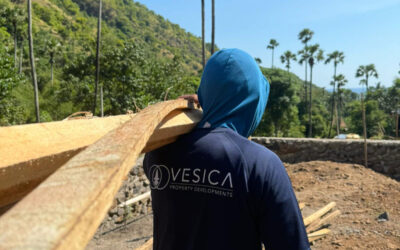
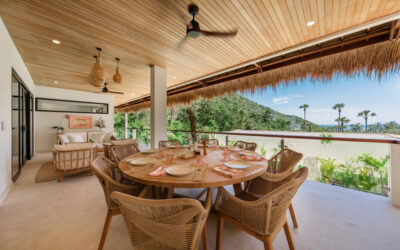
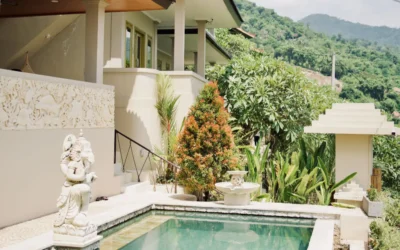
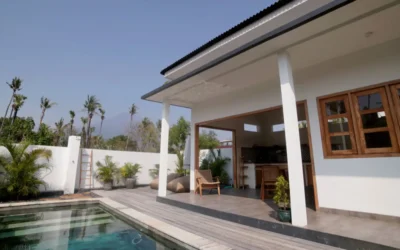
Through our parent company, Vesica Property Developments, we designed and built the private pool villas now run as Vesica Villas Resort in Amed.
The land is positioned on a steep plot above the valley. That experience taught us that the land shapes everything: drainage, retaining walls, water supply and access all need solving before the first wall goes up. Good local builders, a structural engineer who knows the slopes and a clear contract with stage payments make all the difference.
We can introduce you to architects, contractors and notaries we have worked with, and share what we learnt. Once your villa is finished, our property management team can look after it, from guest bookings and housekeeping to maintenance.
Next steps
- Decide the purpose of the villa and the ownership route.
- Shortlist plots and check zoning before you negotiate.
- Appoint an independent notary and complete due diligence.
Commission an architect, then apply for the PBG. - Build, then obtain the SLF before you move in or open to guests.
- If you would like to talk through a plot or a plan, contact us.
This guide is general information, not legal or tax advice. Laws and local policies change, so always consult an independent notary, PPAT or lawyer before buying land or starting a build.